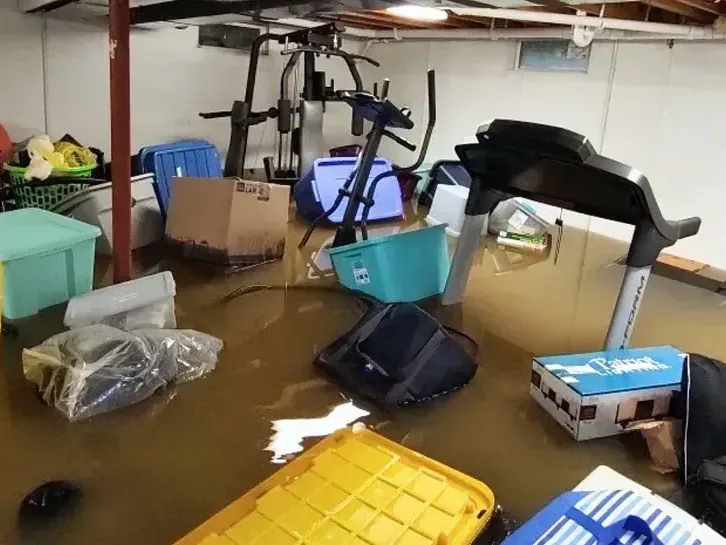
For homes that have a basement, a wet-season storm tests every joint in the concrete. Water shows up along the wall base, at a floor crack or around a window well, and it can spread across a finished room fast.
Key takeaways
- Rain water enters a basement through floor joints, wall cracks, window wells and failed sump pumps.
- Turn off power to a wet basement at the panel before stepping into standing water.
- Move small items and furniture out of the water, then photograph the damage before removal starts.
- Carpet, pad and wet drywall cannot be left in place; they hold water against framing.
- A sump pump check before the rainy months is cheaper than a cleanup after one.
How rain gets through a basement
Basement walls and floors are always in contact with soil. When rain saturates the soil, water pressure builds against the concrete, and any weak point becomes a path.
The Happy Valley area averages 48 inches of rain a year. The city also has a hillside setting, with Mount Scott as the highest point, so the water that falls on higher ground has somewhere to go once the soil is full.
A basement that stays dry through one storm can still flood in the next, because the ground has less room each time. The first heavy rain after a dry summer is often easier on a basement than the third storm in a row.
- Cracks in the floor or wall, even hairline ones, seep when the soil is saturated.
- The joint where the floor meets the wall is a common entry point.
- Window wells without covers or drains fill from above and push water through the window frame.
- Exterior drains and downspouts that discharge near the foundation overload the soil.
What to do before the crew arrives
A flooded basement is mostly a safety problem first. Electricity, furnaces, panels and appliances can all be in the water.
Power, gas and people
If the water has reached outlets, a furnace or the electrical panel, the main breaker should not be touched while standing in water. In that case the owner can stay upstairs and let a professional shut the power off safely.
Children and pets stay out of the room. Water that came in with the storm can carry soil, oil and bacteria.
Protect what can be saved
Items out of the water can be moved to a dry room. Cardboard boxes, paper and fabric are the first to be ruined.
- Lift furniture legs onto blocks or foil to stop stains from spreading.
- Photograph the floor, walls and belongings before moving them.
- Keep damaged items until an insurer has seen the photos or the items.
- Open interior doors to let the air move, but do not run a household fan across contaminated water.
What removal looks like
The first stage is basement flooding cleanup, and it starts with removing water, not drying. Pumps handle deep water, and wet vacuums take what is left on the floor, the same method used in water extraction for any flooded room.
After the surface water is gone, the crew checks walls and floors with a moisture meter. Drywall that wicked water upward is cut above the wet line, and carpet pad is removed because it holds water against the slab.
Speed helps, but so does order. Removing water, then wet materials, then setting drying equipment keeps the work from repeating itself and gives the best chance of saving flooring and framing.
- Pumps and extractors remove standing water and water in carpet.
- Wet carpet pad, baseboards and the lower part of drywall are taken out.
- Contents are moved to dry areas and sorted.
- Surfaces are cleaned and treated before drying equipment is set.
The sump pump question
A basement with a sump pump relies on a motor, a float switch and a discharge pipe to keep the pit empty. Heavy rain asks all three to work for a long time.
When a pump stops, the pit overflows and the basement fills, which is the case sump pump failure cleanup is built for. The cause is often a stuck float, a clogged intake, a tripped breaker or a power outage.
- Pour water into the pit and watch the pump start; this is a quick test before the wet season.
- Check that the discharge pipe sends water away from the house and is not frozen or blocked.
- Look for a battery backup if power outages are common in the area.
- Replace a pump that runs without stopping, makes noise or is old.
Working with an insurer after a basement flood
The cause of the water decides much of what happens next. Surface water and ground water coming through a wall are treated differently from a failed sump pump or a burst pipe, and policies often treat them differently too.
Notes from the first day help. A short written timeline with the date, the weather, when the water was first seen and what was moved gives the insurer a clean record.
The crew's moisture readings, photos and itemized list of removed materials can support the claim. Owners can ask for copies of those records when the job closes.
- Write down when the water was first seen and what the weather was doing.
- Keep receipts for pumps, fans and hotel nights if the house cannot be used.
- Save samples or photos of removed carpet and drywall.
- Ask the insurer what must be kept until an adjuster visits.
Drying the basement after removal
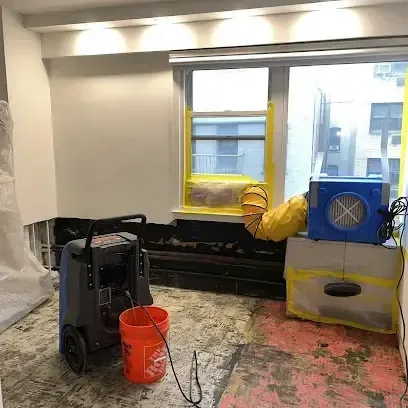
Once the water is out, the concrete, framing and remaining drywall still hold moisture. Drying equipment is set for several days, and readings are taken daily until the structure reaches its normal level.
Air movers and dehumidifiers do most of the work, and the crew changes their positions as areas dry. A basement that looks dry but has damp framing will cause trouble later, which is why the readings matter more than the look of the room.
Reducing the odds of the next storm
A few outside changes cut the water that reaches the walls. Most are simple and can be done before the rainy months.
The goal is to push roof water and surface water away from the foundation, and to keep the sump system working.
- Extend downspouts so they empty well away from the house.
- Keep gutters clear of leaves and debris.
- Check that the soil slopes away from the foundation.
- Test the sump pump and float before the first heavy rain.
Questions
Why does water come in only during heavy rain?
Soil around the basement is only saturated after long or heavy rain. When it is full, water pressure against the walls and floor finds cracks and joints that stay dry otherwise.
Should an owner try to pump out a flooded basement alone?
Small amounts can be handled with a wet vacuum if the power is off. Deep water, contamination or water near electrical equipment is better handled by a crew.
How soon does carpet need to come out?
Wet carpet pad holds water against the slab and framing, so it is usually removed early. Carpet itself can sometimes be cleaned and dried if the water was clean.
Does homeowners insurance pay for a basement flood?
Coverage differs by policy and by the source of the water, such as a sump failure versus surface flooding. The policy language and the insurer decide, so photos and records help.
Do all homes in the area have basements?
No. Housing units here grew from 1,500 in 2000 to 8,081 in 2020, and each house is built differently. The steps apply only to homes that have a basement.