Structural Drying in Happy Valley, OR
24/7 structural drying in Happy Valley, OR. The drying team dries framing, subfloor, wall cavities and crawl spaces with LGR dehumidifiers and air movers, and pulls equipment only when the readings say dry.
(888) 373-8814Get the framing and subfloor measured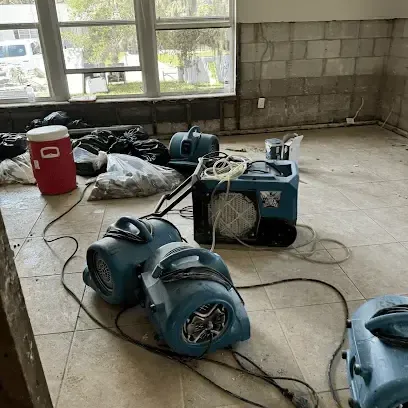
What to do right now about structural drying
- Extract first
Standing water has to come out before drying works.
- Keep equipment running
Turning it off at night lets humidity climb back.
- Close doors and windows
The dehumidifiers work best in a closed space.
- Leave readings to the team
Dry to the touch is not the same as dry inside.
Why the first day matters
Structural drying is what separates a dry house from a house that only looks dry. Surface water evaporates in a day, but framing, subfloor and the back of drywall hold water that keeps the humidity up and the damage growing.
How the restoration team handles structural drying
Readings before equipment
Moisture is mapped first, so the drying plan follows what is actually wet instead of what looks wet.
Drying inside the structure
Air is driven into wall cavities, subfloor and framing, because a dry-looking surface can still hold water behind it.
A file built for the adjuster
Daily moisture logs and timestamped photos go into the record an insurance adjuster reviews.
What does structural drying cost in Happy Valley, OR?
Structural drying usually runs $1,200 to $8,000 or more here, depending on the water category, the square footage, the material class and how fast drying started.
- Class 1 or 2 loss
- A few air movers and one LGR unit
- Three to four days of drying
- Walls, subfloor or crawl space wet
- Wall cavity and floor drying
- Daily readings and logs
- Hardwood, plaster or concrete soaked
- Drying mats and heat
- Extended drying time
Ranges are typical, not a quote. The water category, the square footage, the material class and how fast drying started move the number most. The water damage cost calculator gives a planning range before the walkthrough.
The structural drying dry-out, stage by stage
Equipment counts change with the class of the loss; the four stages and the readings never do.
- STAGE 01
Map
Readings show every wet material.
First reading - STAGE 02
Set equipment
Air movers and LGR units are sized to the load.
Water pulled - STAGE 03
Adjust daily
Equipment moves as areas dry.
Halfway dry - STAGE 04
Verify
Readings hit the dry reference goal.
Dry standard met
How the drying team sets up
Every room gets a moisture map first. Air movers are placed to sweep wet surfaces, LGR dehumidifiers pull the vapor out of the air, and dense materials like hardwood or subfloor get drying mats or directed air. Cool crawl spaces and lower floors get heat to speed evaporation.
- Moisture map before equipment
- Air movers sized to each room
- LGR dehumidifiers and heat where needed
The numbers that decide when it is done
The drying team logs temperature, humidity and material readings every visit. A wet material is dry when it reads within 2 to 4 points of a dry reference material in the same building, and equipment stays until that goal is met.
Drying homes on a slope in Happy Valley
Lower levels set into a hillside and crawl spaces under the floor are the slowest parts of a house to dry. The crew checks them every visit and adjusts the equipment. Water still standing anywhere goes through water extraction first.
Outside references: ready.gov flood safety steps and EPA WaterSense leak and fixture advice.
Structural drying across Happy Valley and Clackamas County
The restoration team covers ZIP 97086, from the hillside streets on Mount Scott and Scouters Mountain down to the valley floor, out through Pleasant Valley and North Carver and over to the Sunnyside edge of town.
Neighboring Portland, Clackamas, Damascus, Sunnyside, Pleasant Valley, Oregon City are covered as well.
Other water problems the restoration team handles
Questions about structural drying
What is structural drying?
Drying the building itself: framing, subfloor, wall cavities and dense materials, not just the visible surfaces. It is measured with readings rather than judged by touch.
Why can't fans alone dry a house?
Fans move air across surfaces, but without dehumidification the moisture just moves into the air and back into the materials. LGR dehumidifiers remove it.
How is the drying goal decided?
The team takes readings from a dry reference material in an unaffected part of the same building. Wet materials are dry when they read within 2 to 4 points of it.
Can the equipment be turned off at night?
It should stay on. Stopping it lets humidity rise and slows the dry-out.
How long does structural drying take?
Most Class 1 and 2 losses dry in three to five days. Hardwood, plaster, concrete and cool crawl spaces can take a week or more.
Looks dry but smells damp?
The drying team measures the framing and subfloor and dries them to a verified goal.
(888) 373-8814Get a verified dry reading