Crawl Space Water Removal in Happy Valley, OR
24/7 crawl space water removal in Happy Valley, OR. The restoration team pumps out water under the joists, pulls soaked insulation and barrier, and dries the framing and subfloor to a measured goal.
(888) 373-8814Get the water under the floor pumped out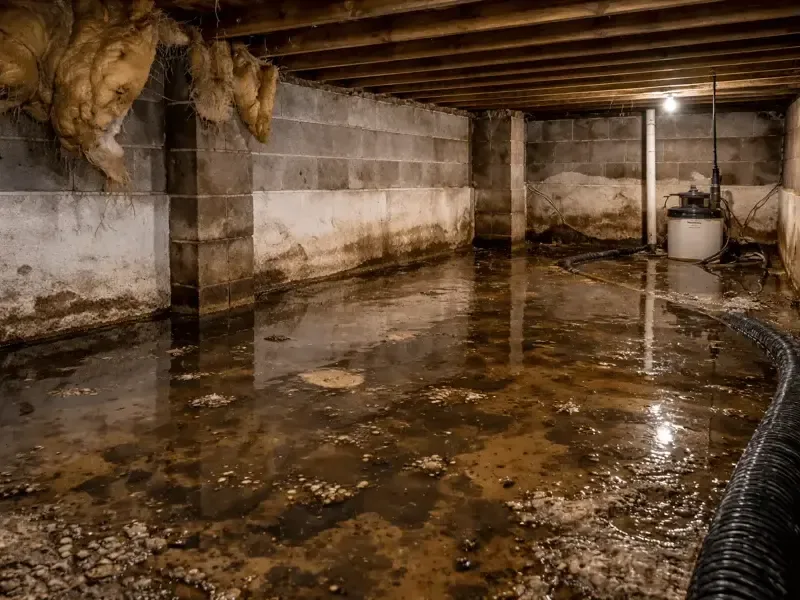
What to do right now about crawl space water removal
- Find the source
Check for a running pipe, a stalled pump or rain entering a vent.
- Shut off the water
If plumbing is the source, close the main valve.
- Stay out of deep water
Do not crawl into standing water near wiring or a furnace.
- Call for a pump-out
Water under the floor keeps raising humidity until it is removed.
Why the first day matters
Water in a crawl space does its damage out of sight. It soaks insulation, sits on the vapor barrier and raises humidity against the underside of the floor, and the first sign upstairs is often a cupped board or a musty smell.
How the restoration team handles crawl space water removal
Readings before equipment
Moisture is mapped first, so the drying plan follows what is actually wet instead of what looks wet.
Drying inside the structure
Air is driven into wall cavities, subfloor and framing, because a dry-looking surface can still hold water behind it.
A file built for the adjuster
Daily moisture logs and timestamped photos go into the record an insurance adjuster reviews.
What does crawl space water removal cost in Happy Valley, OR?
Crawl space water removal usually runs $1,000 to $7,000 or more here, depending on the water category, the square footage, the material class and how fast drying started.
- Clean water on part of the barrier
- Pump-out and spot drying
- Three to five days of drying
- Water across the whole space
- Insulation and barrier removed
- Daily joist and subfloor readings
- Category 3 water under the floor
- Contaminated materials removed
- Antimicrobial and containment
Ranges are typical, not a quote. The water category, the square footage, the material class and how fast drying started move the number most. The water damage cost calculator gives a planning range before the walkthrough.
The crawl space water removal dry-out, stage by stage
Equipment counts change with the class of the loss; the four stages and the readings never do.
- STAGE 01
Inspect and map
Readings on joists, sill and subfloor show the wet area.
First reading - STAGE 02
Pump out
Standing water is removed from the barrier and soil.
Water pulled - STAGE 03
Pull soaked materials
Wet insulation and barrier come out.
Halfway dry - STAGE 04
Dry and verify
LGR drying runs until readings reach the goal.
Dry standard met
How water gets under the floor
On sloped lots, rain from uphill yards runs toward the foundation and through vents or gaps. Inside, a split supply pipe or a failed drain under the house can run for days before anyone notices.
- Rain runoff through vents and foundation gaps
- Supply and drain leaks under the house
- Freeze splits that flow during a thaw
What crawl space drying involves
The crew pumps out standing water, then removes insulation and vapor barrier that soaked through. The drying team sets air movers and an LGR dehumidifier under the floor and seals the space so the dehumidifier pulls water out of the wood instead of the outside air.
Crawl spaces on Happy Valley homes
Many homes here sit over crawl spaces on a slope, with the low side catching most of the water. Readings come from the joists, the sill and the subfloor above, and equipment stays until those numbers reach the goal. Upstairs floors that cupped are handled with structural drying.
Outside references: ready.gov flood safety steps and FEMA flood insurance basics.
Crawl space water removal across Happy Valley and Clackamas County
The restoration team covers ZIP 97086, from the hillside streets on Mount Scott and Scouters Mountain down to the valley floor, out through Pleasant Valley and North Carver and over to the Sunnyside edge of town.
Neighboring Portland, Clackamas, Damascus, Sunnyside, Pleasant Valley, Oregon City are covered as well.
Other water problems the restoration team handles
Questions about crawl space water removal
Can water in a crawl space be left to dry on its own?
Rarely. Crawl spaces are cool and closed, so water lingers, soaks the joists and raises humidity under the floor. Pumping it out and drying with equipment is faster and safer.
Does crawl space water removal include new insulation?
The drying job removes soaked insulation and barrier so the framing can dry. Replacing them is a rebuild step once readings confirm the space is dry.
How is a crawl space dried?
Standing water is pumped out, the space is sealed as much as practical, and air movers plus an LGR dehumidifier run until joists and subfloor reach the drying goal.
What if the water in the crawl space is sewage?
Sewage under the floor is Category 3. Contaminated barrier and insulation are removed, the soil and framing are treated with an EPA-registered antimicrobial, then the space is dried.
Why does the floor upstairs feel soft or cupped?
Humidity from below pushes into the subfloor and flooring. Drying the crawl space usually lets hardwood settle back, though badly cupped boards may need replacing.
Is crawl space water damage covered by insurance?
Water from a sudden pipe break often is. Groundwater or runoff seepage usually is not under a standard policy, so check your own coverage.
Water collecting under the floor?
The restoration team pumps it out, pulls soaked insulation and dries the framing.
(888) 373-8814Pump out and dry the crawl space