Water Extraction in Happy Valley, OR
24/7 water extraction in Happy Valley, OR. The extraction crew pulls standing water off floors, out of carpet pad and from under the joists, then hands the house to the drying team with a first moisture map.
(888) 373-8814Get the standing water pulled out tonight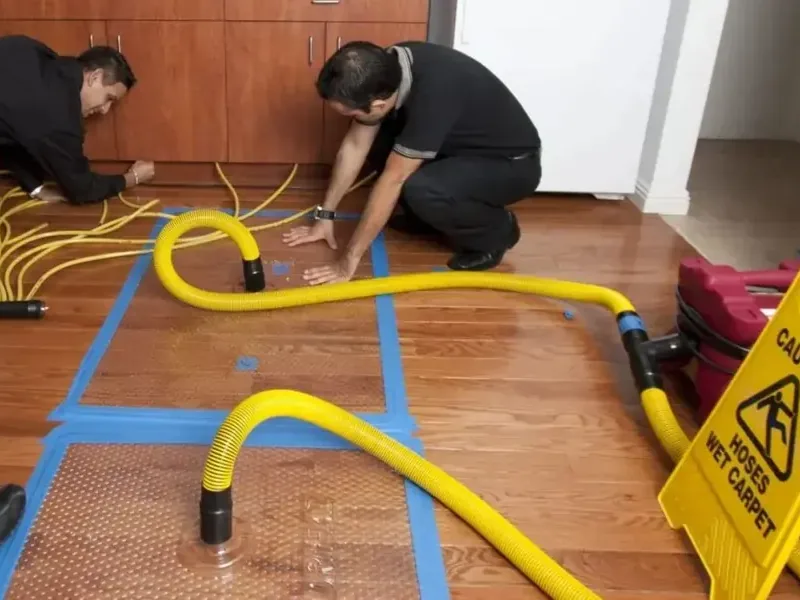
What to do right now about water extraction
- Stop the source
Close the main valve or the fixture shutoff so no more water enters the room.
- Stay off wet carpet
Walking on soaked carpet drives water deeper into the pad and subfloor seams.
- Move what you can
Lift rugs, boxes and electronics onto a dry surface or upper floor.
- Call for extraction
The sooner the water comes out as liquid, the shorter and cheaper the dry-out.
Why the first day matters
Extraction is the cheapest drying there is. Every gallon pulled out as liquid is a gallon the dehumidifiers never have to pull out of the air, so the extraction crew starts the moment the source is shut off.
How the restoration team handles water extraction
Readings before equipment
Moisture is mapped first, so the drying plan follows what is actually wet instead of what looks wet.
Drying inside the structure
Air is driven into wall cavities, subfloor and framing, because a dry-looking surface can still hold water behind it.
A file built for the adjuster
Daily moisture logs and timestamped photos go into the record an insurance adjuster reviews.
What does water extraction cost in Happy Valley, OR?
Water extraction usually runs $800 to $6,000 or more here, depending on the water category, the square footage, the material class and how fast drying started.
- Clean water on carpet or hard floor
- Pad saved when the category allows
- Fans and one dehumidifier
- Water across a floor or into a crawl space
- Pad pulled where needed
- Daily readings and logs
- Sewage or outside water
- Porous materials removed
- Containment and antimicrobial
Ranges are typical, not a quote. The water category, the square footage, the material class and how fast drying started move the number most. The water damage cost calculator gives a planning range before the walkthrough.
The water extraction dry-out, stage by stage
Equipment counts change with the class of the loss; the four stages and the readings never do.
- STAGE 01
Map the edges
Meters and thermal imaging show where water traveled.
First reading - STAGE 02
Extract
Truck-mounted or portable units pull standing water and pad water.
Water pulled - STAGE 03
Set drying
Air movers and LGR dehumidifiers go in, sized to each room.
Halfway dry - STAGE 04
Log readings
Daily moisture readings decide when equipment comes out.
Dry standard met
Why extraction comes before drying
Air movers only speed up evaporation from wet surfaces. If water is still standing on a floor or sitting in carpet pad, the fans push humidity into the walls and the dry-out drags on. A weighted extraction tool squeezes water out of carpet and pad so drying can start from damp instead of soaked.
What the extraction crew checks while working
As the water comes up, the crew traces where it went: under baseboards, into the bottom plate of walls, down into the subfloor and, on many homes here, through to the crawl space below. Thermal imaging and pinless meters mark the edge of the wet area for the drying team.
- Carpet and pad: extracted, then saved or pulled by category
- Hard floors: water pulled from seams and edges
- Crawl space: pumped out when water came through the floor
Extraction on hillside and lower-level homes
Homes built into a slope often take water on the uphill side and pool it on the lowest floor. In Happy Valley the crew checks that low corner first, then works back toward the source. Once the floors are clear, structural drying takes over.
Outside references: ready.gov flood safety steps and EPA WaterSense leak and fixture advice.
Water extraction across Happy Valley and Clackamas County
The restoration team covers ZIP 97086, from the hillside streets on Mount Scott and Scouters Mountain down to the valley floor, out through Pleasant Valley and North Carver and over to the Sunnyside edge of town.
Neighboring Portland, Clackamas, Damascus, Sunnyside, Pleasant Valley, Oregon City are covered as well.
Other water problems the restoration team handles
Questions about water extraction
How fast does water extraction need to start?
As soon as the source is off. Water wicks into drywall and subfloor within hours, and mold can begin within 24 to 48 hours on wet materials, so extraction is treated as urgent at any hour.
Can wet carpet be saved after extraction?
Often, when the water was clean and extraction started quickly. Pad soaked by Category 2 or 3 water is usually pulled, and carpet touched by sewage is removed.
Does a shop vacuum do the same job?
A shop vacuum lifts surface water but cannot squeeze water out of pad or reach the subfloor. Weighted extraction tools and meters find and remove the water a vacuum leaves behind.
What happens after the water is extracted?
The drying team sets air movers and LGR dehumidifiers, and readings are taken every visit until materials reach the drying goal.
Is water extraction covered by insurance?
Extraction after sudden and accidental water is often part of a covered claim, but it depends on your policy and the cause, so check with your own insurer.
Standing water on a floor right now?
The longer it sits, the more of the house it reaches. Extraction stops that.
(888) 373-8814Pull the water before it soaks in