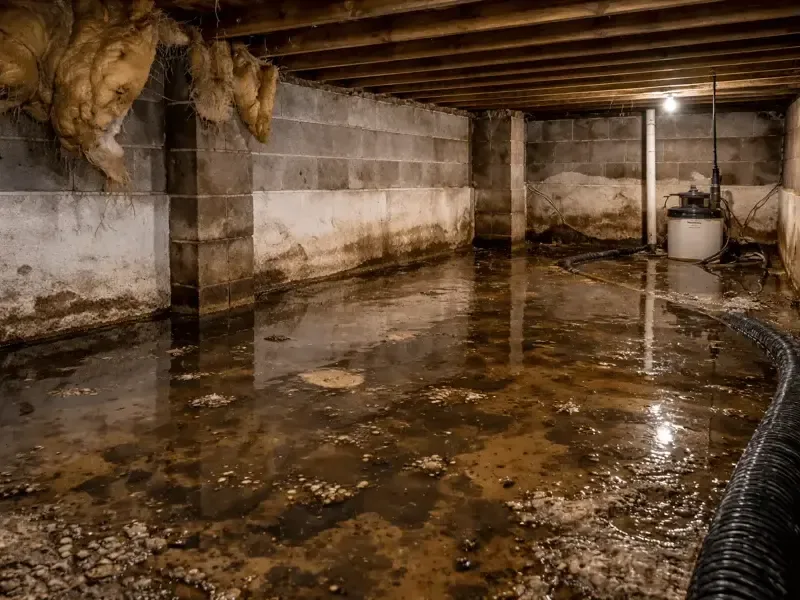
Heavy rain does not always show itself in the living room first. Sometimes the first sign is a floor that feels soft, a musty smell near a vent, or a sound of dripping under the house. A crawl space is a low, dark area, so water can sit there for days before anyone looks.
Key takeaways
- Standing water has a visible surface and reflects a flashlight; damp air only leaves wet insulation, dark soil and beaded moisture on pipes.
- Turn off the water supply to the house first if any pipe is dripping, so a plumbing leak is not feeding the pool.
- Do not enter a crawl space with water near wiring, outlets or a furnace until the power to that area is off.
- The sooner water is pumped out, the less it soaks into subfloor wood, insulation and ducts.
- After pumping, the space needs drying and a check of what got wet, not just a dry surface.
Standing water or just damp air under the floor
A crawl space can feel clammy in any wet season, so the first job is to tell the two conditions apart. Standing water is a real pool or a sheet of water over the soil.
Damp air is moisture that settles on surfaces without any pool.
The Happy Valley area records an average of 48 inches of rain a year, which is a lot for the Portland metro area. That much rain gives the ground plenty of chances to hand water to any low space beneath a house.
A quick look from the access hatch, with a light and without stepping in, is often enough to tell which one is present. If the hatch itself is wet or the soil near it is shiny, the answer is already clear.
- A flashlight beam bounces back from a wet surface when water is standing.
- Footprints or a dropped object make ripples in a pool but not in damp soil.
- Wet insulation hanging down from the floor points to water, not just humidity.
- Rust on fasteners and pipe hangers, with water stains on the lower joists, suggests the problem is not new.
Steps for the first hour of the day
The order matters more than the speed. Safety comes first, then stopping any new water, then removal.
Power and gas come first
Water and electricity share many crawl spaces, with wiring, a junction box or a heating duct tucked into the same joists. If water is anywhere near them, the power to that area should be shut off at the panel before anyone climbs down.
A flooded space with a gas appliance or a heat pump needs the same caution. When there is any doubt, the owner can stay out and let the crew test the area.
Stop any water that is still coming in
A dripping pipe, a cracked supply fitting or a leaking water heater can add to a rain problem. Closing the main shutoff for a few minutes shows whether the pool keeps growing.
- If the pool stops growing with the supply off, the source was plumbing.
- If it keeps rising, rainwater or ground water is the source.
- Photograph the water, the wet insulation and any stained wood before anything is moved.
Why rain finds a way into low spaces here
The city sits between a cinder cone later named Mt. Scott and a knoll later named Scouters' Mountain. Mount Scott is an extinct volcano and the highest point in the city, and ground that slopes away from high points sends storm runoff toward the lower lots.
Housing here grew from 1,500 units in 2000 to 4,708 in 2010 and 8,081 in 2020, so most homes standing today were built after 2000. That tells nothing about any single house, but it does mean many of them sit on fresh grading and new landscaping, where runoff can follow a path the builder never intended.
The result is that a long storm can leave a pool in a low space even when the weather in the house feels normal. The Pleasant Valley and North Carver planning area, where the city has a comprehensive plan, is one of the places where new streets and lots keep changing the way water moves.
- Downspouts that empty beside the foundation hand the roof's water to the soil under the house.
- Soil that slopes toward the foundation steers surface water to the vents and walls.
- Window wells and vent openings that sit below the grade level let rain in.
What the removal crew does first
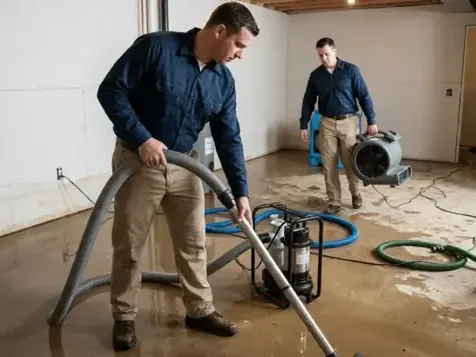
The first stage is crawl space water removal, which means pumping the water out and taking out insulation that is too wet to save. The crew sets submersible pumps in the low spots and runs hoses to a safe discharge point away from the house.
The same method used for any water extraction job applies: pull the bulk water out first, then deal with what remains in materials.
- Pumps and wet vacuums remove the pool and the sheet water over the soil.
- Wet fiberglass or foam board insulation is bagged and removed because it holds water against the subfloor.
- Moisture readings on joists and the underside of the subfloor show how far the water traveled.
- Ducts that sat in water are checked for wet interiors and insulation.
After the pumping: drying the space and the floor above
A crawl space with no standing water is not yet dry. The soil, wood and air hold moisture that goes up into the floor system, so the next stage is structural drying with fans and dehumidifiers matched to the space.
Drying is finished when readings on the framing return to normal, not when the surface looks dry. A moisture meter and a record of daily readings give the owner and an insurer a clear end point.
- Air movers push dry air across joists and the subfloor underside.
- A dehumidifier pulls moisture out of the air so it cannot settle back into the wood.
- The crew checks the floor above for cupping, soft spots and damp carpet pad.
Smaller signs that water has been there
Not every wet crawl space shows a pool when someone finally looks. Water can drain into the soil after a storm and leave evidence behind.
A floor above a wet space often gives the first clue. Hardwood may cup, vinyl may lift at the seams, and carpet may feel damp near an exterior wall, even if the room itself looks fine.
Other signs show up on the structure. Look for water lines on piers, stained insulation that has dropped, and spider webs or soil that look newly disturbed near a vent.
- Floors that squeak, bounce or feel soft in one area.
- A musty or earthy smell that rises through floor registers.
- Water stains on the lower side of floor joists.
- Insulation that has fallen or clumped together.
When the water is more than rain
Some crawl space water is not clean. Runoff that crossed a yard, a yard drain that backed up, or a failed sewer pipe under the house brings contamination, and that changes the handling.
A broken drain leaks sewage into the soil, which shows up as an odor or dark, cloudy water. That kind of water calls for protective gear, disposal of porous materials and cleaning after the pumps are off, and it is better not to enter the space without that gear.
Preparing the space before the next storm
Most crawl space water starts outside. Fixing the way rain leaves the roof and the yard does more than any later cleanup.
The access hatch, vents and the soil cover deserve a look at the start of the wet season. A hatch that seals poorly lets surface water roll in, and torn plastic sheeting lets ground moisture rise into the space.
Taking photos of the dry space is also useful. A clear before picture gives the crew and an insurer a baseline when water does arrive.
- Extend downspouts so roof water drops well beyond the foundation.
- Clear gutters before the fall leaves clog them.
- Rake soil so it slopes away from vents and walls.
- Check that sheeting on the ground lies flat and is not torn.
- Keep the access hatch closed and free of gaps.
Questions
How can an owner tell if water under the house is from rain or a pipe?
Shut off the main supply for a short time and watch the pool. If it stops growing, a pipe was feeding it. If it keeps rising, the source is rain, runoff or ground water.
Is it safe to walk into a flooded crawl space?
Not until the power to that area is off and the space is checked for gas appliances and wiring near the water. Contaminated water also needs protective gear, so many owners wait for a crew.
Does the water need to be removed right away?
Faster removal limits what the subfloor, insulation and ducts absorb. Water that sits can soak into wood and keep the floor above damp long after the pool is gone.
What happens to the insulation?
Wet fiberglass is usually taken out because it holds water against the floor. Foam board can sometimes be cleaned and reused if it is intact.
How does the crew know the space is dry?
Moisture meter readings on the joists and subfloor are compared with readings on dry wood in the house. Drying stops when they match.