Water Extraction for Oregon City Homes
Water left on a floor keeps soaking into padding, baseboards and subfloor. Crews pump out the pooled water, pull what remains from carpet and wood, then move straight into drying the structure beneath.
(888) 373-8814Pump out my floors now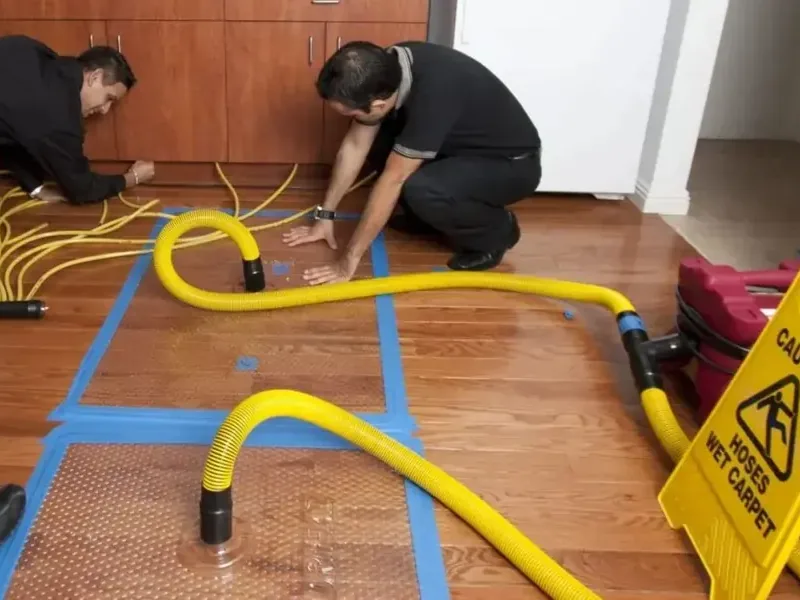
What to do right now about water extraction
- Stop the source
Shut the valve, cut power to wet outlets and keep people off soaked floors.
- Photograph first
Take photos of the high-water mark and damaged items before anything is moved.
- Pump and extract
Crews clear standing water, then pull moisture from carpet, padding and boards.
- Start drying
Air movers and dehumidifiers go in right away to protect the framing.
Why the first day matters
Extraction is the first physical job after a leak or flood, because standing water keeps carrying moisture into padding, drywall and framing. The work starts with pumps and ends with meters confirming what is still wet.
How the restoration team handles water extraction
Readings before equipment
Moisture is mapped first, so the drying plan follows what is actually wet instead of what looks wet.
Drying inside the structure
Air is driven into wall cavities, subfloor and framing, because a dry-looking surface can still hold water behind it.
A file built for the adjuster
Daily moisture logs and timestamped photos go into the record an insurance adjuster reviews.
What does water extraction cost in Oregon City, OR?
Extraction usually costs between $800 and $15,000, depending on how many rooms are wet and whether the water is clean or contaminated. Meters and a walkthrough set the final figure.
- Clean water on one floor
- Extractor pass plus spot drying
- Short monitoring period
- Water spread under walls
- Padding removal and wider drying
- Daily moisture readings
- Gray or black water involved
- Protective gear and disposal
- Full structural drying
Ranges are typical, not a quote. The water category, the square footage, the material class and how fast drying started move the number most. The water damage cost calculator gives a planning range before the walkthrough.
The water extraction dry-out, stage by stage
Equipment counts change with the class of the loss; the four stages and the readings never do.
- STAGE 01
Locate
Meters trace water through floors, baseboards and lower walls.
First reading - STAGE 02
Extract
Pumps and wands pull pooled water off tile, wood and slab.
Water pulled - STAGE 03
Remove
Soaked padding and swollen trim come out and are bagged.
Halfway dry - STAGE 04
Dry
Air movers run until readings reach the dry goal.
Dry standard met
Where the water sits decides the method
Pooled water on tile or sealed concrete goes first, through submersible pumps and a wand. Carpet and padding take longer, since padding holds water like a sponge. Wood floors need gentle suction and mats so boards are not damaged while moisture is drawn out.
- Clean water from supply pipes and appliances
- Gray water from washers or dishwashers
- Black water from sewage or river flooding
Low ground needs fast pumping
The Two Rivers area sits on the lowest bench beside the Willamette River, and the city keeps floodplain maps for it. Water that enters a downtown basement or ground floor has little room to drain, so pumping begins before anything is moved or sorted.
What happens after the pumps stop
Pumping removes the bulk, but wet padding, baseboards and the lowest section of drywall still hold moisture. Technicians log readings, cut or lift what cannot dry, and set air movers and dehumidifiers. Structural drying then continues until readings match a dry reference.
Outside references: ready.gov flood safety steps and EPA WaterSense leak and fixture advice.
Water extraction across Oregon City and nearby communities
Extraction covers the low bench of Two Rivers, the bluff streets of McLoughlin and Park Place, and Canemah along Oregon Route 99E, with Hillendale and Caufield homes served as well in ZIP 97045.
The same service nearby: water extraction in Happy Valley, Damascus, Portland.
Water damage restoration in Oregon City · every town covered
Related water damage services in Oregon City
Questions about water extraction
How soon should standing water come out?
As soon as it is safe, because wet drywall and padding start to break down quickly. Pumping first, then drying, keeps the damage small.
Can carpet be saved after extraction?
Often, when the water was clean and extraction began promptly. Padding is usually replaced, while the carpet itself can sometimes be cleaned and dried in place.
Does a household wet vacuum do the same job?
It clears a puddle but leaves water in padding and subfloor. Weighted and truck-mounted extractors reach deeper and move far more volume.
Is black water handled differently?
Yes. Sewage or river water brings contamination, so crews wear protective gear, remove porous materials instead of drying them, and sanitize what stays.
Do hardwood floors need special care?
Wood needs controlled suction and drying mats so boards do not cup or stain from trapped water. Speed matters, because boards swell as moisture rises.
Will insurance cover extraction?
Sudden events like a burst pipe are commonly covered, while slow seepage often is not. Talking the policy over with the adjuster clarifies which category applies.
Standing water in the house?
Crews extract it, pull soaked padding and set drying equipment before damage spreads.
(888) 373-8814Get the water out now