Water Extraction for Portland Homes
Southeast homes near Johnson Creek can take in creek water when it crests, as it did on December 7, 2015. Fast water removal keeps that water out of subfloors, wall framing and carpet padding, where it is hardest to dry.
(888) 373-8814Call for water removal now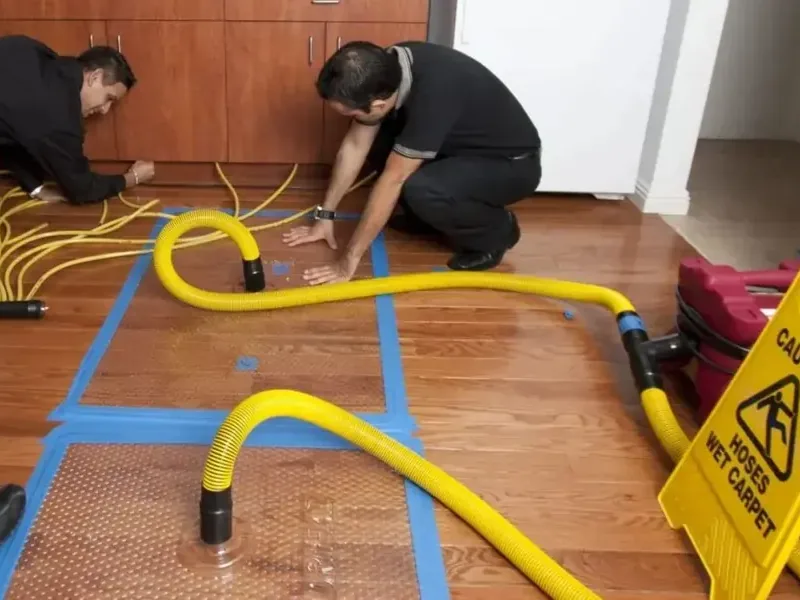
What to do right now about water extraction
- Find the water
Check whether the source is a pipe, a leaking appliance or rain, and stop it first.
- Pump the bulk out
Pumps move standing water out of the home through hoses to a safe drain.
- Extract from surfaces
Wands pull water from carpet, padding and hardwood seams that pumps cannot reach.
- Hand off to drying
Meters check what is left, and drying equipment takes over the remaining moisture.
Why the first day matters
Water extraction is the first step on almost every wet job. A crew removes the bulk of the water mechanically, because every gallon pumped out is a gallon that never has to be dried out of the structure.
How the restoration team handles water extraction
Readings before equipment
Moisture is mapped first, so the drying plan follows what is actually wet instead of what looks wet.
Drying inside the structure
Air is driven into wall cavities, subfloor and framing, because a dry-looking surface can still hold water behind it.
A file built for the adjuster
Daily moisture logs and timestamped photos go into the record an insurance adjuster reviews.
What does water extraction cost in Portland, OR?
Water extraction usually costs $800 to $15,000, depending on how many rooms are wet and whether the water is clean or Category 3. A single room sits at the low end.
- Clean water on one floor
- Pump and wand removal
- Padding lifted if soaked
- Water across two or three rooms
- Carpet and padding removed
- Several days of drying after
- Water across a full level
- Contaminated water handling
- Protective gear and disposal
Ranges are typical, not a quote. The water category, the square footage, the material class and how fast drying started move the number most. The water damage cost calculator gives a planning range before the walkthrough.
The water extraction dry-out, stage by stage
Equipment counts change with the class of the loss; the four stages and the readings never do.
- STAGE 01
Inspect
Meters show where water traveled beyond the visible wet spot.
First reading - STAGE 02
Extract
Pumps and wands remove standing water and surface moisture.
Water pulled - STAGE 03
Remove wet padding
Soaked padding and swollen trim are cut out and bagged.
Halfway dry - STAGE 04
Hand off
Drying equipment is placed for the wet structure.
Dry standard met
Why creek and rain water need quick removal
Johnson Creek flooding mainly affects Lents, the area west of 82nd Avenue and lower Powell Butte, and creek water carries silt that settles into carpet and floor seams. Heavy winter rain can also push water through doors and low windows into any southeast home.
- Standing water on carpet, tile or hardwood
- Wet padding that must be lifted and discarded
- Water pooled in low rooms and entry areas
How the water comes out
Truck mounted or portable pumps move the bulk of the water, then extraction wands pull moisture from carpet, padding and hardwood seams. Wet padding is cut out and discarded, while carpet is lifted only when it can be dried.
What happens after the pumps stop
A technician then maps the wet areas with a moisture meter and sets air movers and dehumidifiers, because extraction never reaches water held inside subfloor and wall cavities. That remaining moisture is what structural drying removes over the next several days.
Outside references: ready.gov flood safety steps and EPA WaterSense leak and fixture advice.
Water extraction across Portland and nearby communities
Crews work across southeast and east Portland, including Lents, Powellhurst-Gilbert and Brentwood-Darlington, and reach homes along Foster Road, Powell Boulevard and 82nd Avenue. A dispatcher confirms the neighborhood and the wet rooms on the call.
The same service nearby: water extraction in Happy Valley, Damascus, Oregon City.
Related water damage services in Portland
Questions about water extraction
How fast should water be removed after a flood?
As soon as it is safe to enter, because padding and subfloors begin soaking up water right away. Delay leaves more moisture for the drying equipment to remove.
Can carpet be saved after extraction?
Carpet from clean water losses can often be lifted, cleaned and dried in place. Carpet padding is usually discarded, and carpet touched by sewage is removed.
What is Category 3 water?
Category 3 water is grossly contaminated, such as sewage or floodwater from a creek. It needs protective gear and removal of porous materials.
Does a basement need a pump first?
Deep standing water in a basement is pumped down first, then wands finish the floor. Pumping in stages protects the walls from sudden pressure changes.
Is extraction enough without drying?
No. Extraction removes standing water, but moisture stays inside wood, drywall and subfloor. Drying equipment and readings finish the job.
What should be moved before the crew arrives?
Lift small furniture, rugs and electronics onto dry surfaces, and leave the pumping, padding removal and heavy lifting to the crew.
Water across the floor?
A dispatcher gets the pumps and wands rolling to the wet rooms.
(888) 373-8814Start the pump out now