Structural Drying in Portland
Wet season air in the Portland area holds moisture, which slows drying after a flood or a pipe break. Moisture mapping and steady equipment bring the structure back to a dry standard.
(888) 373-8814Portland structural drying help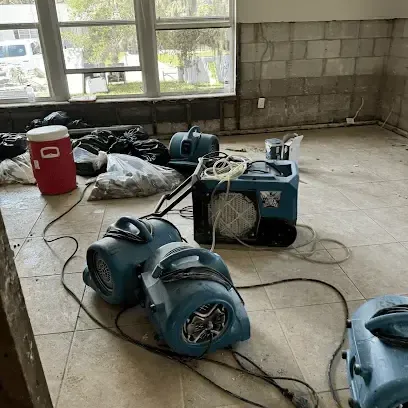
What to do right now about structural drying
- Map the moisture
Meters and a thermal camera mark every wet wall, floor and ceiling.
- Set equipment
Air movers and dehumidifiers go in by room size and material type.
- Check each day
Readings are logged and equipment is adjusted as areas dry.
- Release the room
Equipment is removed once every surface meets the dry goal.
Why the first day matters
Structural drying is the long middle of a water job. After the standing water is gone, moisture stays locked in wood, drywall and concrete, and only controlled airflow and dehumidification pull it back out.
How the restoration team handles structural drying
Readings before equipment
Moisture is mapped first, so the drying plan follows what is actually wet instead of what looks wet.
Drying inside the structure
Air is driven into wall cavities, subfloor and framing, because a dry-looking surface can still hold water behind it.
A file built for the adjuster
Daily moisture logs and timestamped photos go into the record an insurance adjuster reviews.
What does structural drying cost in Portland, OR?
Structural drying usually costs $1,200 to $18,000. One area is the low end, while several rooms or dense materials such as Class 4 loads need far more equipment time.
- One room or one wall section
- Standard equipment run
- Three to five days
- Water in two or more rooms
- More air movers and units
- About a week of drying
- Hardwood, concrete or plaster
- Specialty drying tools and longer runs
- Extended runs with logs
Ranges are typical, not a quote. The water category, the square footage, the material class and how fast drying started move the number most. The water damage cost calculator gives a planning range before the walkthrough.
The structural drying dry-out, stage by stage
Equipment counts change with the class of the loss; the four stages and the readings never do.
- STAGE 01
Map
Meters and a camera mark every wet surface.
First reading - STAGE 02
Set
Equipment goes in by room volume and material.
Water pulled - STAGE 03
Log
Readings are recorded every day and compared.
Halfway dry - STAGE 04
Release
Gear leaves when all materials read dry.
Dry standard met
Why drying runs slower in wet season
Outdoor air during the long wet season is already damp, so drying happens in a closed room where dehumidifiers control the humidity. Opening windows can pull in more moisture and stall the job. Warmer room air also lets the same equipment remove more water.
- Air movers aimed along walls and floors
- Dehumidifiers sized to the room volume
- Containment of the wet area
Moisture mapping and daily readings
A technician records meter readings on every wet surface and compares them with a dry reference point. Each day the numbers are checked again, equipment is moved or removed as areas dry, and the log shows exactly when the structure meets the goal.
Hard to dry materials
Hardwood, plaster, concrete and framing release water slowly, so they set the length of the job. Class 4 materials may need extra drying tools, longer runs or partial removal when readings stop falling.
Outside references: ready.gov flood safety steps and EPA WaterSense leak and fixture advice.
Structural drying across Portland and nearby communities
Drying crews work in Lents, Foster-Powell, Montavilla, Richmond and South Tabor, as well as homes around Mount Tabor. The dispatcher asks which rooms are wet and how the water got in.
The same service nearby: structural drying in Happy Valley, Damascus, Oregon City.
Related water damage services in Portland
Questions about structural drying
Why does drying take several days?
Water is trapped in wood, drywall and concrete, and it leaves slowly as dehumidified air passes over the surface. Rushing it leaves damp spots.
Can windows be opened to speed up drying?
Usually not. Closed rooms let dehumidifiers control the humidity, while open windows bring damp outdoor air into the job.
How is dry defined?
Dry means readings match the same materials in an unaffected part of the home, or a written goal set before drying began.
Why do the machines make noise and heat?
Air movers and dehumidifiers run all day and release warm air as they remove water, which is normal.
Does structural drying prevent mold?
It lowers the risk by removing the moisture mold needs, especially in the first 24 to 48 hours. Wet material that cannot be dried is removed.
Will daily visits be needed?
A technician checks readings on a schedule, adjusts equipment and records the numbers. Those daily logs also support the insurance claim.
Walls still damp?
A technician maps the moisture and sets the equipment for the whole wet area.
(888) 373-8814Set up the drying equipment