Basement Flooding Cleanup in Portland
Heavy rain and creek flooding such as the Johnson Creek events can send water into east and southeast lower levels. A flooded basement needs pumping, removal of wet materials and steady drying with daily readings.
(888) 373-8814Call about the flooded basement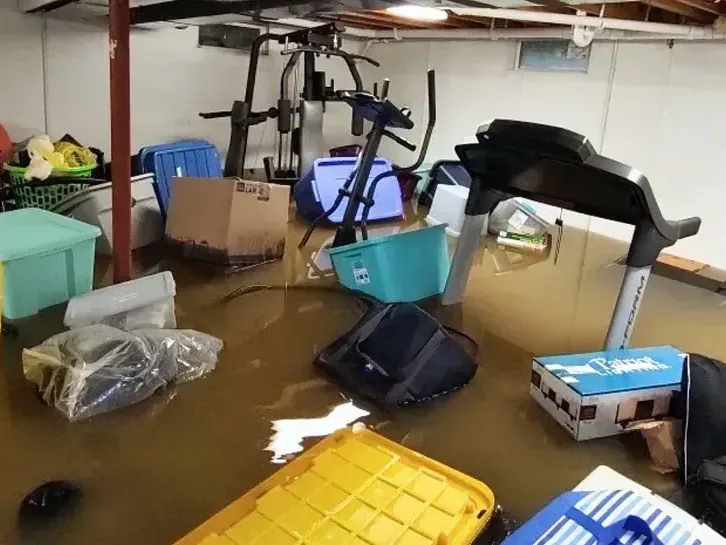
What to do right now about basement flooding cleanup
- Check the hazards
Stay out of standing water near outlets or the panel until power is confirmed safe.
- Lower the water
Pumps drop the level in stages while the crew watches the walls.
- Clear wet materials
Drywall, carpet and ruined storage come out so the slab can breathe.
- Dry and monitor
Dehumidifiers run until slab, walls and framing read dry.
Why the first day matters
A flooded basement holds water against concrete, framing and everything stored below. Because the room sits low, the water has nowhere to drain, so pumping and drying decide how much of the lower level can be kept.
How the restoration team handles basement flooding cleanup
Readings before equipment
Moisture is mapped first, so the drying plan follows what is actually wet instead of what looks wet.
Drying inside the structure
Air is driven into wall cavities, subfloor and framing, because a dry-looking surface can still hold water behind it.
A file built for the adjuster
Daily moisture logs and timestamped photos go into the record an insurance adjuster reviews.
What does basement flooding cleanup cost in Portland, OR?
Basement flooding cleanup usually costs $2,000 to $25,000. An unfinished space stays near the bottom, while a finished lower level or sewage pushes the total higher.
- Bare walls and slab
- Pump down and dry
- One week of equipment
- Drywall and carpet removed
- Trim and padding discarded
- Longer drying with readings
- Contaminated water present
- Protective gear and disposal
- Extended cleaning and drying
Ranges are typical, not a quote. The water category, the square footage, the material class and how fast drying started move the number most. The water damage cost calculator gives a planning range before the walkthrough.
The basement flooding cleanup dry-out, stage by stage
Equipment counts change with the class of the loss; the four stages and the readings never do.
- STAGE 01
Assess
Water depth, source and electrical hazards are checked first.
First reading - STAGE 02
Pump
The level is lowered in stages through long hoses.
Water pulled - STAGE 03
Clear
Wet drywall, carpet and padding are removed to the dry edge.
Halfway dry - STAGE 04
Dry
Dehumidifiers and air movers run with daily readings.
Dry standard met
Where basement water comes from
Heavy winter rain, a rising Johnson Creek, a failed sump pump or a pipe in the wall can each put water in a southeast basement. Runoff from Lents and Powellhurst-Gilbert is routed to sumps, so drainage that fails leaves water on site.
- Water pumped down in stages
- Wet drywall cut above the waterline
- Stored items sorted, dried or discarded
Staged pumping and drying
Pumping a deep basement all at once can stress walls from the soil pressure outside, so the water level is lowered in stages. Wands then lift the last film from the slab, and wet drywall, carpet and baseboards are removed.
What can be saved
Hard goods such as plastic bins and tools can be cleaned and dried. Cardboard, soaked upholstery and padding rarely recover, and anything touched by sewage or runoff is discarded. Photos taken before removal support the insurance review and show the adjuster what was lost.
Outside references: FloodSmart flood coverage facts and ready.gov flood safety steps.
Basement flooding cleanup across Portland and nearby communities
Basement jobs come from Lents, Foster-Powell, Mt. Scott-Arleta and the neighborhoods west of 82nd Avenue, where creek and runoff water gather in low ground. A dispatcher asks how deep the water stands.
The same service nearby: basement flooding cleanup in Happy Valley, Damascus, Oregon City.
Related water damage services in Portland
Questions about basement flooding cleanup
How soon should a flooded basement be pumped?
Pumping starts once electrical hazards are cleared, because water left standing swells framing and soaks stored items. The level drops in stages.
Can a finished basement be saved?
Often yes, when the water was clean and drying starts early. Wet carpet, padding and low drywall come out while the framing and slab dry.
Does creek flooding count as a flood claim?
Rising water from outside is often treated as flood damage, which many policies exclude, so the policy wording comes first.
Is basement water dangerous?
It can be. Water near outlets is an electrical hazard, and runoff or sewage carries bacteria.
How long does a basement take to dry?
A slab and block walls hold water longer than framing, so drying often runs a week or more.
Will a dehumidifier alone fix a wet basement?
No. Standing water and soaked materials come out first, then dehumidifiers pull the rest from concrete and framing.
Basement under water?
Describe the depth and the source, and a dispatcher plans the pumps, hoses and dehumidifiers.
(888) 373-8814Send pumps and dehumidifiers