Sewage Backup Cleanup in Portland
Heavy rain can fill Portland's combined sewer system, as it did on December 19, 2021, and a blocked or broken pipe can push sewage into a home. The cleanup needs protective gear and careful removal.
(888) 373-8814Call about the sewage backup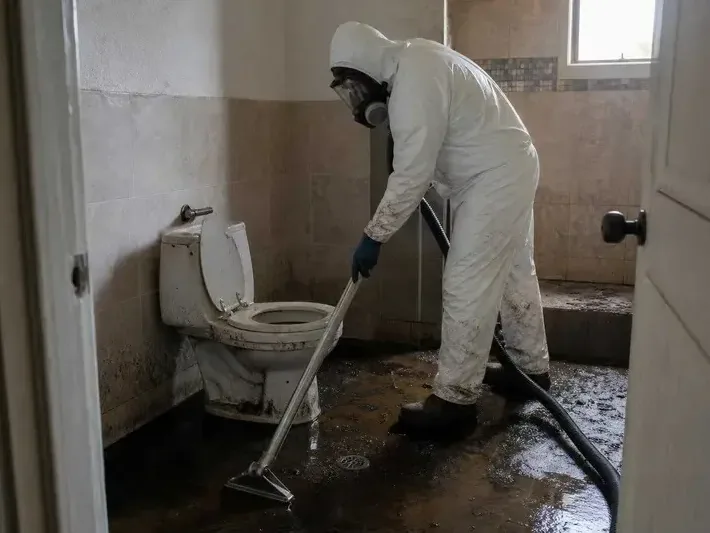
What to do right now about sewage backup cleanup
- Keep the area closed
Stay out of the room, keep children and pets away and avoid touching anything wet.
- Stop the source
Find which drain or fixture is backing up and stop using the plumbing.
- Remove and clean
Protected crews remove sewage and porous materials, then treat the surfaces.
- Dry and verify
Equipment dries the structure until readings meet the goal.
Why the first day matters
Sewage is not ordinary water. It carries bacteria and viruses, so a backup is treated as a health hazard from the moment it appears, and the area is kept closed to children, pets and anyone not wearing protection.
How the restoration team handles sewage backup cleanup
Readings before equipment
Moisture is mapped first, so the drying plan follows what is actually wet instead of what looks wet.
Drying inside the structure
Air is driven into wall cavities, subfloor and framing, because a dry-looking surface can still hold water behind it.
A file built for the adjuster
Daily moisture logs and timestamped photos go into the record an insurance adjuster reviews.
What does sewage backup cleanup cost in Portland, OR?
Sewage backup cleanup usually costs $2,500 to $30,000. A small backup stays at the bottom, while a major backup through a lower level reaches the top of the range.
- One bathroom or utility area
- Protective cleaning of floors
- A short drying period
- Carpet and padding removed
- Drywall cut above the water
- Treatment and drying
- Contaminated water across rooms
- Heavy removal and disposal
- Extended cleaning and drying
Ranges are typical, not a quote. The water category, the square footage, the material class and how fast drying started move the number most. The water damage cost calculator gives a planning range before the walkthrough.
The sewage backup cleanup dry-out, stage by stage
Equipment counts change with the class of the loss; the four stages and the readings never do.
- STAGE 01
Contain
The affected area is sealed off from clean rooms.
First reading - STAGE 02
Extract
Pumps and wet vacuums remove contaminated water.
Water pulled - STAGE 03
Remove
Porous materials such as carpet and drywall go out.
Halfway dry - STAGE 04
Treat
Surfaces are cleaned, treated and dried before release.
Dry standard met
Why sewers back up in wet weather
The Bureau of Environmental Services operates the city sewer system, and a combined sewer overflow is about 80 percent stormwater and 20 percent sewage. When heavy rain loads the system, or when a home's own drain pipe is blocked or broken, wastewater can rise into lower fixtures.
- Sewage rising from a floor drain
- Gurgling toilets and slow drains
- A sewer smell in a lower level
How the cleanup is done
Crews wear protective suits, gloves and respirators, remove standing sewage and cut out soaked carpet, padding and drywall that cannot be cleaned. Hard surfaces are scrubbed and treated, and the bagged waste is disposed of correctly.
Drying and verifying the space
Once the contaminated material is out, air movers and dehumidifiers dry the structure. Readings confirm dryness, and surfaces are checked again before the room is released for rebuilding. Salvage is limited, because porous items touched by sewage are usually discarded.
Outside references: ready.gov flood safety steps and FEMA flood insurance basics.
Sewage backup cleanup across Portland and nearby communities
Backup cleanup reaches Lents, Powellhurst-Gilbert, Hazelwood and Brentwood-Darlington, plus streets near Foster Road. The dispatcher asks which fixtures are backing up and how far the water has spread inside the home.
The same service nearby: sewage backup cleanup in Happy Valley, Damascus, Oregon City.
Related water damage services in Portland
Questions about sewage backup cleanup
Is a sewage backup dangerous?
Yes. Sewage carries bacteria and viruses, so the area stays closed until protected crews finish.
Why are carpet and padding thrown out after sewage?
Porous materials soak up bacteria and cannot be made safe by cleaning, so carpet, padding and low drywall are removed.
Why does rain cause sewage backups?
Heavy rain can overload the city sewer system, and a blocked drain pipe at the home adds to it. The Big Pipe project cut overflows to the Willamette River by 94 percent.
Does insurance cover sewage backup?
Often only with a water backup endorsement. Standard policies commonly exclude it, so reading the policy wording early saves surprises.
Can the room be used during cleanup?
No. The area stays sealed so contamination does not spread, and the backed up fixtures stay unused.
How is the surface treated afterward?
Hard surfaces are cleaned, then treated with a disinfectant, and the area is dried so nothing stays damp.
Sewage in the house?
Stay out of the area, then call so a protected crew can start removal.
(888) 373-8814Send a protected crew