A sewage backup is the most unpleasant kind of water damage, and it is also the one with the most health risk. Southeast Portland has a large public sewer system and a major overflow project, which gives a useful picture of how storms and sewers interact.
Key takeaways
- The Bureau of Environmental Services operates Portland's sewer system.
- The Big Pipe project finished in 2011 as a 20 year, $1.4 billion program to cut combined sewer overflows.
- Since the Big Pipe, overflows dropped 94 percent to the Willamette River and 99 percent to the Columbia Slough.
- A combined sewer overflow is about 80 percent stormwater and 20 percent sewage.
- Sewage inside a building is contaminated water that needs protective gear and removal of porous materials.
How the system is built
The Bureau of Environmental Services operates the city's sewer system. In older parts of town, one pipe carries both household sewage and storm runoff, which is called a combined system.
When heavy rain fills a combined system, the excess can overflow to a river or slough. A combined sewer overflow is about 80 percent stormwater and 20 percent sewage.
Newer neighborhoods tend to separate storm drains from sewer pipes. Understanding which type serves a street helps explain why some areas see more overflow than others.
What the Big Pipe did
The Big Pipe project finished in 2011 as a 20 year, $1.4 billion program to cut combined sewer overflows. Since then, overflows dropped 94 percent to the Willamette River and 99 percent to the Columbia Slough.
The system still has limits. On December 19, 2021 a wintry mix filled the Big Pipe system and caused the fifth combined sewer overflow of 2021 into the Willamette River.
Those figures describe the river and slough, not a particular house. They show that big storms still push the system to its limits, even after major investment, and they explain why basements in low areas keep their own protections.
Overflows are not the same as a backup in a house
An overflow to a river and a backup into a basement are different events. A backup in a home usually involves a blockage, a damaged pipe on the property or a drain that cannot take the flow.
The city notes that a broken sewer or drain pipe leaks sewage into the yard. The owner is often the first to notice a problem, through slow drains, gurgling sounds or water rising in a floor drain.
A private pipe can fail from roots, age, ground movement or a blockage built up from grease and debris. The result is the same: wastewater has nowhere to go but up or out.
- Several drains slow down at once, such as a tub, a sink and a toilet.
- Gurgling sounds when a nearby fixture is used.
- Sewer odor from floor drains or the lowest fixtures.
- Water or sludge rising in a basement drain.
Neighborhoods and homes in the area
The town page for this part of Portland lists the neighborhoods served. Lents was platted as the Town of Lent in 1892 and annexed by Portland in 1912.
Powellhurst-Gilbert is Portland's most populous neighborhood with 32,852 residents in 2020, and about 58 percent of its households own their home while about 42 percent rent.
Rental households add a layer to a sewage problem. Tenants report the issue promptly and in writing, and landlords arrange the repair and cleanup.
Landlords and owners share the same practical goal: stop the use of drains, document the damage and bring in a crew before the contamination spreads into walls and subfloors. Delay allows sewage to soak into porous materials, which makes removal larger.
Safety rules for the first moments
Sewage contains bacteria and viruses. Contact with skin, mouth or eyes is a real risk, and children and pets should be kept out.
Ventilation matters, but not in the way many expect. Opening windows helps with odor, while fans should not blow across a contaminated floor because they spread droplets through the home.
- Stay out of the affected room if possible.
- Do not run the dishwasher, washing machine or shower while drains are backed up.
- Wear boots, gloves and eye protection if entry is unavoidable.
- Do not use a household vacuum on sewage; it spreads contamination.
- Keep children, pets and visitors out of the room.
How sewage cleanup works
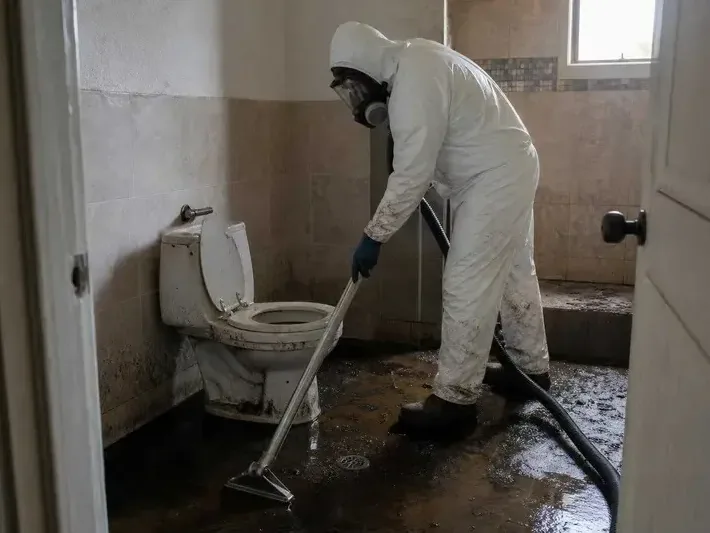
A sewage backup cleanup differs from clean water work. Protective gear is worn, and the crew removes the sewage before anything else.
Porous materials that touched sewage, such as carpet, pad, insulation and drywall, are normally cut out and disposed of. Hard surfaces are cleaned and treated, and the area is dried.
Contents get the same treatment. Items that cannot be washed and treated safely are discarded, and the owner is asked to approve the list so the claim has a record.
Plumbing repair is a separate step from cleanup. A pipe that broke or blocked will fail again unless it is fixed, so the plumber and the cleanup crew work in an order that keeps the area safe.
- Standing sewage is pumped or vacuumed out.
- Contaminated carpet, pad and lower drywall are removed.
- Surfaces are washed, treated and checked.
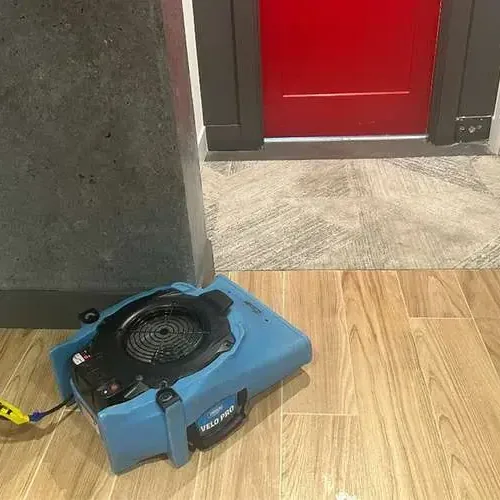
- Air movers and dehumidifiers dry the structure.
Records and communication after a backup
A sewage event often involves several parties: the owner, a landlord or tenant, an insurer and sometimes a plumber. Clear records keep those conversations simple.
Photos of the room before cleanup, the affected drain and the removed materials form the base of that record. A short written timeline with dates and who was told what adds to it.
Plumbing inspection of the private pipe is also worth recording, since it shows whether the blockage was inside the property.
When a finished basement or lower level is involved, built-in cabinets, trim and flooring are removed at the contaminated level, and the room is rebuilt only after clearance.
- Photograph the room, drains and removed materials.
- Write down who was told and when.
- Keep the plumber's report.
- Ask the crew for moisture and cleaning records.
Drying and clearance after the cleanup
Once contaminated materials are gone, the remaining structure still holds moisture. Structural drying follows, with readings until the framing and slab are normal.
The last stage is a check that surfaces are clean and odors are gone. A cleanup is not done just because the floor looks fine.
Many owners ask when it is safe to move back in. The answer comes from the cleaning checks and moisture readings, not from the calendar.
Questions
Who operates the sewer system in Portland?
The Bureau of Environmental Services operates the city's sewer system.
What is a combined sewer overflow?
It is a release from a combined system during heavy rain, and it is about 80 percent stormwater and 20 percent sewage.
Did the Big Pipe end overflows?
No, but it reduced them. Overflows dropped 94 percent to the Willamette River and 99 percent to the Columbia Slough, and the system filled again on December 19, 2021.
What does a sewage backup in a home usually involve?
Often a blockage or damaged pipe on the property, not the river overflow. The signs are slow drains, gurgling and water rising in floor drains.
Can carpet touched by sewage be saved?
Usually not. Porous materials that touched sewage are normally removed and disposed of.